The Best Fly Shop on the Front Range Isn’t in Boulder. It’s in Lafayette.

Walk into enough fly shops and you learn the taxonomy. There are the gear warehouses — technically thorough, atmospherically cold, staffed by people who seem vaguely inconvenienced by the presence of customers. There are the boutique shops with $900 rods positioned under glass like jewelry, where the transaction feels like an audition for a club you’re not sure you want to join. And then, rarely, there is the kind of shop where someone pours you a coffee and asks where you’ve been fishing, and actually listens to the answer.

Arbor Anglers in Lafayette, Colorado, is the third kind.

What Happens When You Walk In

The shop is on the Front Range, between Denver and Boulder, in a strip that doesn’t announce itself from the parking lot. Walk through the door and that impression ends immediately. The walls hold a serious selection of rods, reels, waders, and boots across a range of price points that doesn’t assume you arrived in a Range Rover — or that you should feel embarrassed if you did. The fly bins are organized and current, stocked to reflect what’s actually working on local water, not what arrived in last month’s shipment. There’s a live fishing report on the wall. There’s usually coffee.

What you will not find: silent judgment when you ask a question you feel like you should already know the answer to. What you will find: someone who wants to know what river you’re fishing, what you’ve tried, and what the fish are actually doing — and who will tell you the honest answer, even if the honest answer is that you don’t need to buy anything new.

This is not a policy. It’s the culture that James Parker built deliberately, from the beginning, and it shows in the people he keeps around.

The Man Behind the Counter

James Parker grew up in Texas, the son of two Navy veterans. He fished the kinds of water you fish because it’s close and it’s there — farm tanks, bayous, Gulf Coast estuaries where the speckled trout and redfish move in shallow water in the early morning and the light is wide and flat and worth waking up for. He learned to tie flies in Nebraska, on creek water that didn’t have a famous name but had fish in it. He worked his way through rivers the length of the Texas and Florida coastlines before the mountains pulled him west.

He appeared on Survivor. He’s led trips to Patagonia. He has stood in Colorado’s alpine creeks above tree line and in the tailwaters of the South Platte below a canyon and everywhere in between — and he has spent four decades refining the kind of knowledge that doesn’t come from reading about rivers, only from standing in them.

What he built in Lafayette is a shop that reflects the person he is: technically serious, completely human, and more interested in your experience on the water than in the revenue on your transaction. “He really helped me dial in what rod I liked,” one customer wrote, “and I never felt pressured. He also gave me some casting pointers which have really helped.” That’s not a review of a sale. It’s a review of a relationship.

What the Shop Carries

Arbor Anglers stocks what the Front Range angler actually needs, built around the rivers people are actually fishing.

Rods and reels span from entry-level to expedition-grade, with staff who have cast most of them and can tell you — specifically, honestly — which one fits your casting style and your budget. Waders and boots in real fits for real bodies. Fly tying materials that run deep: dubbing, hackle, hooks, UV resin, flash, beads, foam, and the full range of specialty materials for the angler who ties their own and takes that seriously.

And flies. The fly selection at Arbor Anglers is built around what’s working on local water right now — updated by guides who were on the South Platte or Boulder Creek recently, not by a regional purchasing manager two states away. Midges for the tailwaters. Caddis for Boulder Creek in late spring. Stonefly patterns for the Poudre when the runoff drops. The person behind the counter knows which hook size, which color variation, and which presentation the fish are currently expecting. And they’ll tell you.

There’s also a current fishing report — not a generic seasonal overview, but an actual account of conditions on specific stretches of specific rivers, updated to reflect what our guides and regulars have been seeing this week.

Why Lafayette Is Not a Compromise

Arbor Anglers sits between Denver and Boulder — 30 minutes from either, directly in the path of the western suburbs that funnel traffic toward Clear Creek, Boulder Creek, and the South Platte drainage. The location is a feature, not a consolation prize.

Anglers drive past closer shops to get here. That’s not conjecture — it’s in the reviews, written by people who made the comparison and made a choice. “There are a LOT of fly shops on the Front Range to choose from,” one customer wrote. “Arbor Anglers embodies everything I want in a fly shop.” He named the classes, the fly tying materials, the selection of price points, and then the thing that actually kept him coming back: “everyone there is happy to talk fishing.”

That’s the line. Happy to talk fishing. Patterns, flows, rods, hatches, where to go, what to try, what to do differently next time. The conversation is not a preamble to a transaction. It’s the thing itself.

A Place That Becomes Part of Your Routine

There’s a kind of local shop that becomes a fixture in your life — where you stop in before a trip to check the report, and after to debrief what worked, and sometimes on a Wednesday for no reason except that the conversation is good and being around fishing people makes the rest of the week feel more manageable.

Arbor Anglers is that shop for a lot of Front Range anglers. It’s a community, built on the premise that the sport is better when the people around it are generous with what they know. The guides, the staff, the regulars who lean against the counter on slow afternoons — they are all people who love this enough to share it.

Come in. The river is still there when you leave, and you’ll go to it better prepared than when you arrived.


Arbor Anglers is located in Lafayette, Colorado — between Denver and Boulder on the Front Range. We carry gear, flies, and fly tying materials; offer guided trips, classes, and wader rentals; and keep a current fishing report on local Front Range waters. Visit the shop or contact us to plan your next trip.
What the River Knows That You Don’t

You’ve watched the YouTube videos. You’ve tied flies at the kitchen table until midnight — Copper Johns and RS2s and midge clusters, with the concentration of someone defusing something important. You’ve read the reports, bought the map, driven two hours to stand in a river that clearly, visibly, undeniably has fish in it.

You went home empty.

This is not a failure of effort. It’s a failure of information — and the gap between what you know and what the river requires on any given morning is not something you can close from a screen. It closes on the water, next to someone who’s been reading the same seams for decades.

What a Guide Actually Does

There’s a version of this conversation that reduces guiding to catching more fish. That’s true, but it misses the point. A guide doesn’t just improve your catch. He changes the way you read water.

By the end of a day on the South Platte with one of our guides, you’ll understand why the fish are holding in that specific seam and not the one ten feet upstream. You’ll understand why the size 22 midge cluster is the fly at 9 a.m. and why the afternoon will ask for something different — not because someone handed you a schedule, but because you watched it happen in real time with someone who could explain the why while it was unfolding in front of you.

That knowledge doesn’t stay on the river. It comes home with you. Every subsequent trip, you’re fishing with that day layered underneath it. The river becomes more legible. The guesswork compresses.

The Waters We Know

Our guides work the South Platte system with the familiarity that only comes from showing up year after year on the same water in every condition. From the demanding tailwaters of Cheesman Canyon — where the fish are large, selective, and operating with a professional-grade suspicion of anything that doesn’t look exactly right — to the wide meadow bends of the Dream Stream, where a well-placed size 20 RS2 in the film can bring up a brown trout that will make you question your previous understanding of the word.

We also guide on the Blue River near Silverthorne, the Cache la Poudre above Fort Collins, the Big Thompson through Estes Park, and several stretches of private water that aren’t available to you unless you come with someone who has the relationship. That access is part of what you’re booking. The expertise is the other part.

There is no single piece of the Front Range where our guides are unfamiliar. They’ve fished these rivers in March ice and August heat, in runoff and low water, on the days when everything is eating and on the days — rarer than you’d think — when nothing is. Both kinds of days teach you something, and both are better with a guide who’s lived through enough of them to know which adjustments to make and when to stop adjusting and just be on the river.

James Parker Has Been Reading This Water for a Long Time

The man who built Arbor Anglers didn’t arrive in Colorado with a prepared resume. James Parker grew up in Texas, the son of two Navy veterans, fishing the kinds of water you fish because it’s there — farm tanks, coastal estuaries, Gulf Coast flats where the redfish run in the afternoon heat and the presentation window is measured in seconds. He learned to read moving water on Nebraska creeks. He spent years on the Texas and Florida coasts chasing saltwater species with a fly rod before the mountains pulled him west.

He appeared on Survivor. He’s guided in Patagonia. He’s led first-time anglers to their first trout and taken seasoned anglers to the best fish of their lives, and he treats those two days with the same care.

The guides he’s assembled around him carry the same ethic. Brandon, Charlie, Chris, Sean, Travis, Trevor, Tyler — each of them with their own relationship with Colorado water, their own years of local knowledge, their own ability to read the person standing next to them in the river and understand what kind of day they actually need.

What to Expect When You Book

A guided trip with Arbor Anglers is not a tour. You are not following someone through scenery. You’re in a working partnership with a professional whose singular goal is to make you a more capable angler by the time you step out of the river.

That means honest feedback when your cast is pulling left. It means a fly change before you’ve decided you need one, because your guide saw the fish reject your presentation twice in a row and already knows why. It means adjusting the day around your energy and your skill level — pushing when you’re ready, slowing down when the river is asking for patience, and knowing the difference.

Half-day and full-day options are available for individuals, pairs, and small groups. If you’re new to fly fishing, a guided trip is the single highest-leverage thing you can do. If you’ve been fishing for years, it’s the fastest way to find the ceiling of what you currently know — and then push through it.

We also offer group trips for larger parties, destination travel for anglers ready to take their experience beyond Colorado, and gift certificates for the person in your life who has been putting this off for too long.

The River Is Not Waiting for You to Figure It Out

The South Platte is running right now. The fish are in the water, holding in seams that have been holding fish since before either of us were here. Somewhere in a bend below a foam line on a stretch of river that our guides know like a second home, there is a brown trout feeding on midges with the focused indifference of an animal that has seen everything — except your fly, presented correctly, at the right depth, on the right drift.

Book a guide trip. Let us close that gap.


Arbor Anglers’ professional guides serve the South Platte, Blue River, Cache la Poudre, Big Thompson, and private Front Range waters. We’re based in Lafayette, Colorado — between Denver and Boulder — and available for half-day, full-day, and group trips. Book a guided trip or contact us to start planning.

Some Places, You Have to Earn With Your Legs

There’s a pull-off along Clear Creek Canyon where the river bends hard left and disappears behind a wall of granite. You can see it from the highway — the flash of green water, the white-capped chute, the cottonwoods pressing close from both banks. Every driver catches it. Almost none of them stop.

The ones who stop are the ones who came on bikes.

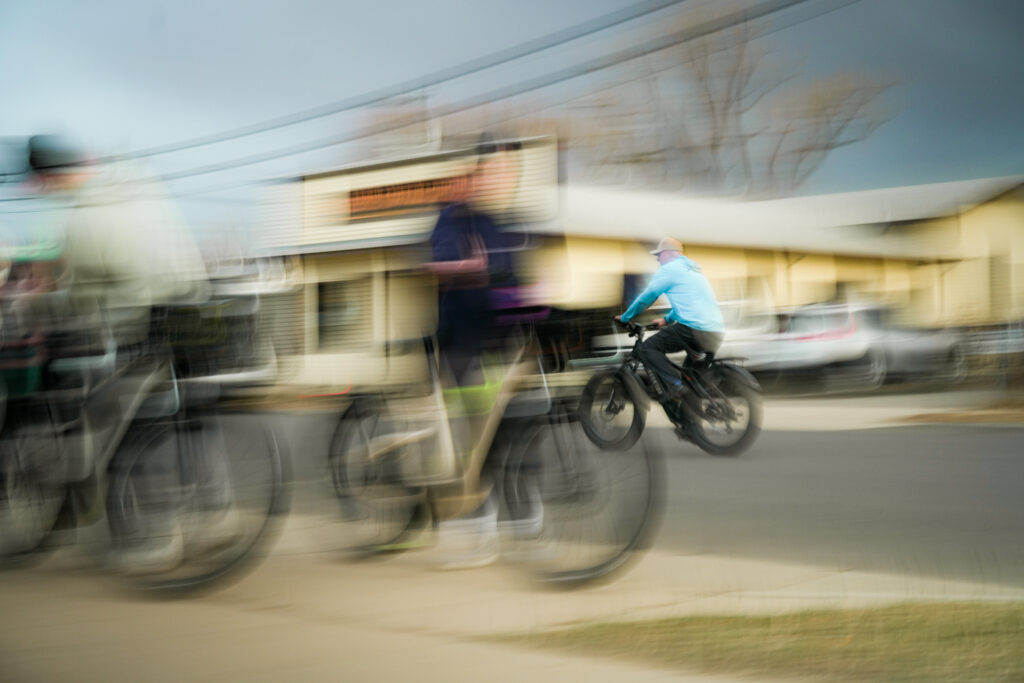
Reel n Ride is Arbor Anglers’ premium e-bike concierge service — a simple idea with a very specific point. There are places in Colorado that can only be properly experienced at a pace slower than a car and faster than a hike. The e-bike hits that frequency exactly. And with delivery and pickup handled for you, the only thing you need to bring is a reason to be outside.

The Part That Changes Everything: We Come to You

Other bike rentals hand you a helmet and a map and wave you toward the parking lot. Reel n Ride delivers the bikes to you — to your hotel, your retreat venue, your trailhead — and picks them up when you’re done. The logistics are invisible. The experience isn’t.

This matters most for groups. If you’re a meeting planner building a corporate retreat in the Rockies, or a hotel concierge putting together an activity package for guests who flew in from Chicago and have one afternoon to spend outside, the delivery model removes the friction that turns a good idea into a headache. No one has to drive across town to a bike shop. No one negotiates whether the rental racks fit the vehicle. The bikes arrive. The routes are curated. Your group rides out into one of three destinations that were chosen specifically because they reward the effort.

Three Destinations. Three Different Days.

Clear Creek Canyon

This is drama. The creek runs fast through a narrow gorge west of Golden, and the canyon walls press close enough that you feel the geology around you, not just above you. The Peaks-to-Plains Trail runs along the water for miles with minimal car access, which means that once you’re rolling, the road falls behind you quickly and stays there.

This is the destination for people who want to feel genuinely far from the city while still being 40 minutes from it. The air is different in the canyon. The light comes in at angles. The creek is loud in the best way — the kind of sound that interrupts the loop of whatever you were thinking about in the car and replaces it with the simple fact of moving water.

Boulder Creek

More meditative. More varied. The path follows the creek through Boulder and into the foothills, moving between urban and wild in a way that’s specific to this place and hard to replicate anywhere else. The Flatirons appear and disappear as the trail bends. The water changes character with the grade. Families with mixed fitness levels find this destination forgiving; there’s something worth stopping for every quarter mile.

Boulder Creek is the destination you choose when the goal is a day spent in easy motion — the kind of day where conversation happens naturally because the effort is low enough to talk and the scenery is good enough to talk about.

Estes Park

The crown jewel. Arrive on a weekday in late spring or early fall — before the summer crowds find their footing, after the mountain passes have cleared — and Rocky Mountain National Park’s eastern gateway is one of the most spectacular cycling destinations in the state.

The routes are longer here. The altitude is more pronounced. The landscape is openly dramatic in a way that doesn’t require squinting or poetry to appreciate — it simply presents itself. Elk move through meadows without acknowledging your presence. The peaks are close in a way that doesn’t feel right until you’ve been there once. This is the destination you choose when you want to give someone a day they’ll describe in detail to people who weren’t there.

Built for This Landscape

The e-bikes Reel n Ride uses are matched to Colorado terrain — enough assist to handle the grade without converting the ride into a shuttle, enough precision to feel like you’re the one doing the work. Which you are. The motor is there for the hills. The experience is still yours.

This is not a passive activity. It’s access. The difference between seeing a landscape through a car window and being inside it — smelling the sage when the afternoon sun hits it, feeling the altitude shift as you gain elevation, watching the river change character as you follow it upstream. The bike is the vehicle. The landscape is the point.

For Every Kind of Group

Reel n Ride serves two very different audiences, and we’ve built the offering to handle both without compromise.

For individuals and families, the experience is about choosing your destination — Clear Creek, Boulder Creek, or Estes Park — and going deep into it. One location per trip, enough time to actually be somewhere instead of rushing through it.

For hotels, corporate retreats, and meeting planners, it’s about delivering a premium, curated outdoor experience that doesn’t require the group to become logistics coordinators. You’re already handling the agenda. We’ll handle the bikes.

Both audiences leave with the same thing: a day that felt real. A day in motion, in air that tasted like altitude, in a landscape that made the rest of the week feel smaller and less urgent. That’s not a marketing promise. That’s just what Colorado does when you stop insisting on experiencing it from behind glass.

How to Book

Reel n Ride operates as a contact-first experience — because the best days are built around your group’s size, your chosen destination, and your schedule, not a checkout form. Reach out through Arbor Anglers to start the conversation.

Bring comfortable layers. Bring a camera, or don’t, and just look. Leave everything else at the hotel. The canyon is already there.


Reel n Ride is a premium e-bike concierge service from Arbor Anglers in Lafayette, Colorado. We serve individuals, families, hotels, and corporate groups across three Front Range destinations: Clear Creek Canyon, Boulder Creek, and Estes Park. [Inquire about your experience](#).

Fly Fishing the Front Range: Where to Go When You Only Have a Day

The meeting ends at noon. Outside, the sky is doing that thing Colorado sky does in May — deep and unambiguous, like someone turned the contrast up on the whole world. You have waders in the back of the truck and nowhere to be until Monday. The math here is simple.

The Front Range is not just a place to live near fly fishing water. It *is* fly fishing water. Within two hours of Denver or Boulder, you have access to some of the most technically rewarding trout fishing in the country — spring creeks, freestones, tailwaters, and alpine runs that hold fish the size of your forearm. The river has been running all morning. The only variable is which direction you point the truck.

The South Platte: Where the Serious Water Lives

If the Front Range has a spine, it’s the South Platte. From the tailwaters below Cheesman Canyon through Deckers, past Eleven Mile Canyon, and up into the Dream Stream stretch between Spinney Mountain Ranch and Eleven Mile Reservoir, this is a river system that rewards the angler who knows it — and quietly, efficiently humbles the one who doesn’t.

Cheesman Canyon is the stretch people whisper about. The wade is technical, the fish are large and well-educated, and the hatch windows demand precision. BWOs fire on overcast spring afternoons. Caddis and PMDs carry through summer. An Elk Hair Caddis lobbed at a rising fish gets you exactly nothing here. Come ready to work.

The Dream Stream is a different animal: a wide meadow tailwater where the South Platte meanders through grassy bends before dropping into Eleven Mile Reservoir. In early morning, before the wind picks up, you can sight-fish browns in the 20-inch range in water so clear it feels unfair — until you realize the fish can see you just as well. Bring binoculars and patience in equal measure.

Eleven Mile Canyon sits between those two extremes — accessible, scenic, and genuinely productive across multiple species. Rainbow, brown, the occasional brook trout tucked into the upper reaches. For a Front Range angler who wants consistent action in a dramatic canyon setting, this stretch earns its drive time every time.

Boulder Creek: Closer Than You Think

For Denver anglers, Boulder Creek tends to get overlooked. That’s a mistake. The creek runs through the heart of Boulder and climbs into the foothills, and while it won’t give you shoulder-season solitude, the hatches are reliable and the fish — particularly in the upper canyon stretches — are real and selective.

The best water is west of town, where the canyon narrows and the creek picks up speed over broken rock. Midge activity is consistent year-round on the lower reaches. In late spring, watch for the BWO hatch to fire on overcast, 50-degree afternoons — the kind of gray day that keeps everyone else at home and puts the fish into the film. Park at the Fourmile Canyon trailhead and work upstream. Give it two hours and you’ll understand why Boulder anglers stop apologizing for fishing in town.

Clear Creek Canyon: The Gem Everyone Drives Past

Most people experience Clear Creek Canyon at 75 miles per hour on I-70, catching a flash of green water in the gorge below before the tunnel takes them. That’s their loss and yours — because the creek parallels Highway 6 through a dramatic limestone canyon west of Golden, and it holds a population of wild rainbows and browns that, given how easy it is to reach, remains genuinely underfished.

Pull off at any of the creek-side turnouts along Highway 6 and work the pockets. It won’t match the Dream Stream for size or Cheesman for technical challenge — but for a Tuesday evening after work, when you need moving water under your waders more than you need a trophy, Clear Creek is the right answer.

Push North: The Poudre and the Big Thompson

Drive toward Fort Collins and you hit the Cache la Poudre — Colorado’s only federally designated Wild and Scenic River and a freestone fishery that fishes differently than anything in the tailwater corridor. Fast pocket water, aggressive fish, and a stonefly hatch in early summer that will make you feel like you wandered into a different sport. This is water with teeth. Come ready to move.

The Big Thompson, dropping out of Estes Park through a narrow canyon before opening onto the plains, earns its own trip in September. The summer crowds have thinned by then, the spawning browns are on the move, and the canyon holds that particular autumn light that makes every cast feel like it belongs in a photograph you’ll try and fail to take.

What the River Doesn’t Tell You on Its Own

Here’s the honest truth about Front Range fly fishing: knowing *where* to go is only half of it. Knowing what’s happening on a specific piece of water on a specific morning — which fly, which presentation, which side of which seam — is the other half, and it takes either years of local knowledge or a conversation with someone who already has it.

Arbor Anglers in Lafayette keeps a current fishing report across all of these waters. It’s a fly shop that sits between Denver and Boulder on the Front Range, staffed by people who have spent time on every stretch in this guide and will tell you — specifically, honestly — where the fish are eating and what they’re eating them with. Stop in before you go. Have a cup of coffee. Leave with actual intelligence instead of hope.

The report is current. The coffee is warm. The truck is already pointed west.


*Arbor Anglers is located in Lafayette, Colorado — halfway between Denver and Boulder on the Front Range. We offer guided trips, current fishing reports, gear, flies, and the kind of conversation that actually improves your day on the water. Book a guided trip or visit the shop to start planning.*