
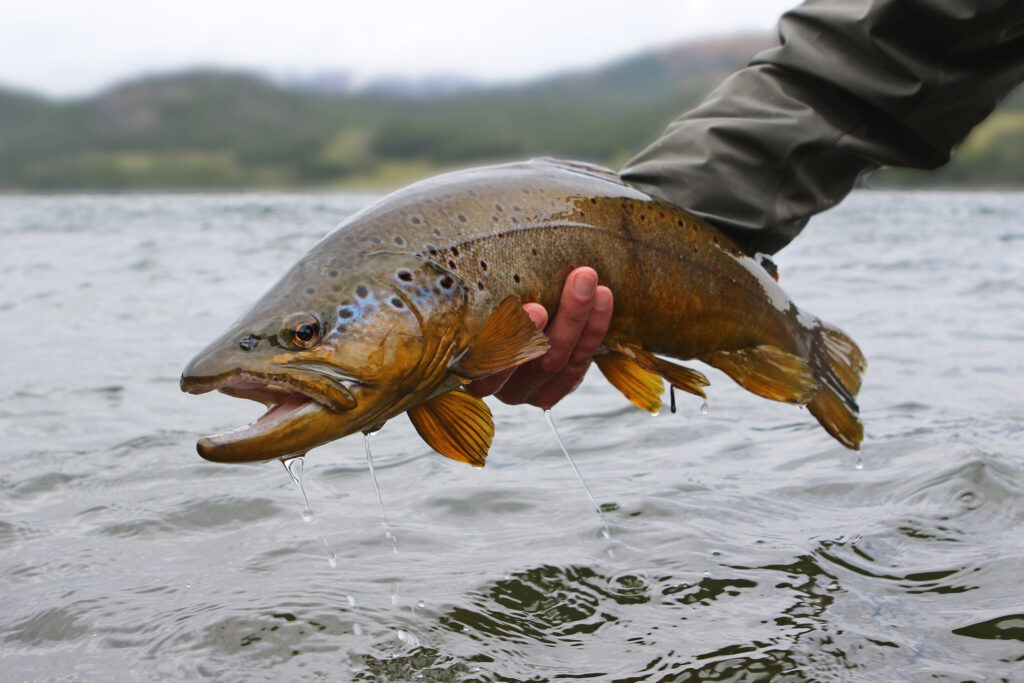
Streamer fishing, especially during brown trout spawn season, is not about fishing directly over spawning fish. Instead, it’s about targeting the aggressive fish that surround them. When done correctly, it can be some of the best streamer fishing of the year.
In Colorado, brown trout spawn roughly from mid-September to November, with the peak occurring in October. Here’s how to fish it ethically and effectively.
#1. The Mindset: Understanding the Situation
During spawn, you’ll encounter three groups of fish:
– **Actively spawning** on redds: These are light-colored, clean gravel beds located in shallow tailouts. It’s crucial to leave them alone. Avoid casting to them or wading through redds.
– **Pre-spawn staging:** These are large, aggressive, and territorial fish that reside in deeper water, just above or below the spawning gravel. This is your target.
– **Post-spawn and non-spawning opportunists:** These include rainbows, smaller browns, and even larger browns that are not actively spawning but are feasting on eggs and flesh. They can also be excellent targets.
Remember, the bites you encounter during this time are not necessarily feeding bites. They are driven by aggression, territorial instincts, and the need for protein. Larger fish will fiercely defend their space against any intruders.
#2. Finding the Right Spots (Without Stepping on Redds)
Instead of searching for the light spots, focus on the areas near them.
– **Above the redd:** Look for deep slots, cut banks, or boulder gardens located 20-50 feet upstream. These are prime spots where large males are likely to be waiting.
– **Below the redd:** Seek out deep troughs or buckets where eggs drift downstream. Every trout in the river is familiar with this feeding line.
– **Inside bends with walking-speed water:** These are ideal locations for staging females as they prepare to spawn.
– **In your area – South Platte, Colorado, Blue, Williams Fork:** Focus on slower inside seams adjacent to faster spawning riffles, not the riffles themselves.
If you spot paired-up fish over clean gravel, keep moving.
#3. Gear Setup
You want to get down and stay in control, but you don’t need to dredge.
– **Rod:** A 6wt rod is ideal, but a 7wt rod is better if you’re throwing big articulated flies in windy conditions. Choose a rod length of 9’ to 9’6”.
– **Line:** Use an intermediate sink or sink-tip (IPS 3-5) line instead of a full sink line. Most staging water is 2-5 feet deep.
– **Leader:** Use 4-5 feet of 0x-2x fluorocarbon leader straight to the fly. Avoid using fancy tapered leaders.
– **Extra:** Polarized glasses are essential for spotting and avoiding redds.
#4. The Spawn Season Streamer Box
Categorize your streamers into two types: intruders and egg-eaters.
**Colors that matter now:** **White, olive, black, and brown trout.** The white belly flash of these trout triggers them. Always have one streamer with a hot orange or pink egg head.
**Sizes:** Choose streamers in sizes #4 to #8 instead of giant 6-inch articulated streamers in the fall. Match the size of the smaller food – the fish are focused on eggs and small sculpins, not 10” rainbows.
# 5. How to Fish Them
This is not a summer bank-banging technique. Slow it down significantly.
**A) The Slow Swing + Twitch**
– Cast the streamer quartering upstream.
– Let it sink to near the bottom.
– Swing the streamer through the slot with 6-inch slow strips and long pauses.
– Most trout will strike during the pause when the fly hovers in their face.
**B) Dead Drift Then Strip**
– Cast the streamer dead drift upstream.
– Strip the streamer as you drift downstream.
– This technique is effective for catching trout that are feeding on the surface.
Above a trough, dead drift the Egg Sucking Leech like a nymph under an indicator or with a tight line, then let it swing and do 2-3 slow strips at the end. That swing-then-strip is deadly for fish sitting below spawning activity.
**C) Low and Into Structure**
Cast into the cut bank, let it drop for 2-3 seconds, then one long, slow pull out. Don’t strip fast – think “annoying intruder trying to sneak away,” not “baitfish fleeing.”
Bite detection: It will not be a slam most days. It feels like a heavy pause, or your line just stops. Strip set hard to the bank, not trout set up.
#6. Timing and Conditions
– **Best window:** 9am – 3pm once water has warmed a degree or two. Browns get more active mid-day during spawn vs. early morning in summer.
– **Water temp:** 44-52F is prime. Below 42F, go even slower and deeper.
– **Flow:** Slightly off-color after first fall rains is perfect. That little stain lets big fish feel safe moving in shallow.
– **Pressure:** Fish will see a lot of egg patterns. Throwing that sculpin/intruder pattern after everyone else has thrown eggs is often what gets the big male.
### The Ethical Check###
Colorado regs don’t close spawn, but our etiquette should:
1. Don’t wade in gravelly tailouts where water is 1-2ft deep and clean. That’s a redd field.
2. If you hook a fish that is dark, hooked jaw, obviously spawning and on a redd, break it off fast or land and release without photos.
3. Keep fish wet, quick release. These fish are putting all their energy into next year’s fish.
If you still have question please stop by the shop and we can help you learn how to identify where you should and should not fish during these very vital seasons! Also what pattens have been effective on what water.
IF WE DON’T TAKE CARE OF IT? WHO WILL? IT IS OUR RESPONSIBILITY TO HELP MANAGE OUR FISHERIES, NOT JUST THE PEOPLE FROM THE CPW OR OTHER GOVERNMENTAL AGENCIES! DO YOUR PART!!!