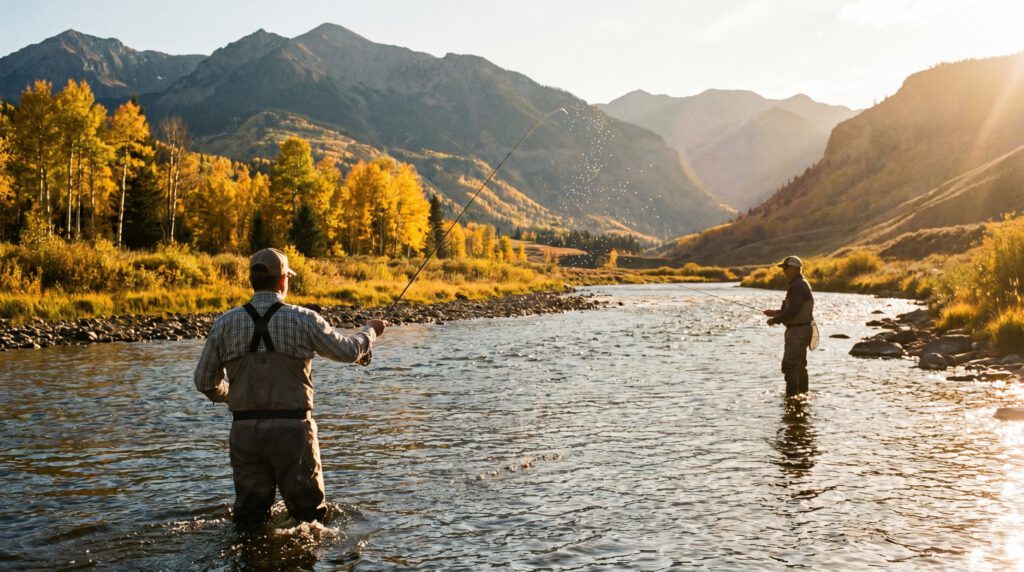
The meeting ends at noon. Outside, the sky is doing that thing Colorado sky does in May — deep and unambiguous, like someone turned the contrast up on the whole world. You have waders in the back of the truck and nowhere to be until Monday. The math here is simple.
The Front Range is not just a place to live near fly fishing water. It *is* fly fishing water. Within two hours of Denver or Boulder, you have access to some of the most technically rewarding trout fishing in the country — spring creeks, freestones, tailwaters, and alpine runs that hold fish the size of your forearm. The river has been running all morning. The only variable is which direction you point the truck.
The South Platte: Where the Serious Water Lives
If the Front Range has a spine, it’s the South Platte. From the tailwaters below Cheesman Canyon through Deckers, past Eleven Mile Canyon, and up into the Dream Stream stretch between Spinney Mountain Ranch and Eleven Mile Reservoir, this is a river system that rewards the angler who knows it — and quietly, efficiently humbles the one who doesn’t.
Cheesman Canyon is the stretch people whisper about. The wade is technical, the fish are large and well-educated, and the hatch windows demand precision. BWOs fire on overcast spring afternoons. Caddis and PMDs carry through summer. An Elk Hair Caddis lobbed at a rising fish gets you exactly nothing here. Come ready to work.
The Dream Stream is a different animal: a wide meadow tailwater where the South Platte meanders through grassy bends before dropping into Eleven Mile Reservoir. In early morning, before the wind picks up, you can sight-fish browns in the 20-inch range in water so clear it feels unfair — until you realize the fish can see you just as well. Bring binoculars and patience in equal measure.
Eleven Mile Canyon sits between those two extremes — accessible, scenic, and genuinely productive across multiple species. Rainbow, brown, the occasional brook trout tucked into the upper reaches. For a Front Range angler who wants consistent action in a dramatic canyon setting, this stretch earns its drive time every time.
Boulder Creek: Closer Than You Think
For Denver anglers, Boulder Creek tends to get overlooked. That’s a mistake. The creek runs through the heart of Boulder and climbs into the foothills, and while it won’t give you shoulder-season solitude, the hatches are reliable and the fish — particularly in the upper canyon stretches — are real and selective.
The best water is west of town, where the canyon narrows and the creek picks up speed over broken rock. Midge activity is consistent year-round on the lower reaches. In late spring, watch for the BWO hatch to fire on overcast, 50-degree afternoons — the kind of gray day that keeps everyone else at home and puts the fish into the film. Park at the Fourmile Canyon trailhead and work upstream. Give it two hours and you’ll understand why Boulder anglers stop apologizing for fishing in town.
Clear Creek Canyon: The Gem Everyone Drives Past
Most people experience Clear Creek Canyon at 75 miles per hour on I-70, catching a flash of green water in the gorge below before the tunnel takes them. That’s their loss and yours — because the creek parallels Highway 6 through a dramatic limestone canyon west of Golden, and it holds a population of wild rainbows and browns that, given how easy it is to reach, remains genuinely underfished.
Pull off at any of the creek-side turnouts along Highway 6 and work the pockets. It won’t match the Dream Stream for size or Cheesman for technical challenge — but for a Tuesday evening after work, when you need moving water under your waders more than you need a trophy, Clear Creek is the right answer.
Push North: The Poudre and the Big Thompson
Drive toward Fort Collins and you hit the Cache la Poudre — Colorado’s only federally designated Wild and Scenic River and a freestone fishery that fishes differently than anything in the tailwater corridor. Fast pocket water, aggressive fish, and a stonefly hatch in early summer that will make you feel like you wandered into a different sport. This is water with teeth. Come ready to move.
The Big Thompson, dropping out of Estes Park through a narrow canyon before opening onto the plains, earns its own trip in September. The summer crowds have thinned by then, the spawning browns are on the move, and the canyon holds that particular autumn light that makes every cast feel like it belongs in a photograph you’ll try and fail to take.
What the River Doesn’t Tell You on Its Own
Here’s the honest truth about Front Range fly fishing: knowing *where* to go is only half of it. Knowing what’s happening on a specific piece of water on a specific morning — which fly, which presentation, which side of which seam — is the other half, and it takes either years of local knowledge or a conversation with someone who already has it.
Arbor Anglers in Lafayette keeps a current fishing report across all of these waters. It’s a fly shop that sits between Denver and Boulder on the Front Range, staffed by people who have spent time on every stretch in this guide and will tell you — specifically, honestly — where the fish are eating and what they’re eating them with. Stop in before you go. Have a cup of coffee. Leave with actual intelligence instead of hope.
The report is current. The coffee is warm. The truck is already pointed west.
*Arbor Anglers is located in Lafayette, Colorado — halfway between Denver and Boulder on the Front Range. We offer guided trips, current fishing reports, gear, flies, and the kind of conversation that actually improves your day on the water. Book a guided trip or visit the shop to start planning.*